
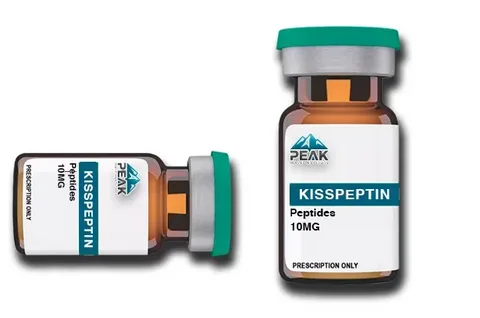
KissPeptin-10Kisspetin
Price range: $65.00 through $90.00
Kisspeptin-10: Overview, Research Uses & Key Information
Kisspeptin-10, also known as KP-10, is the smallest fully bio active fragment of the kisspeptin peptide family.
It originates from the KISS1 gene.
This decapeptide consists of the amino acid sequence Tyr‑Asn‑Trp‑Asn‑Ser‑Phe‑Gly‑Leu‑Arg‑Phe‑NH₂.
Kisspeptin-10: Overview, Research Uses & Key Information
Kisspeptin-10, also known as KP-10, is the smallest fully bio active fragment of the kisspeptin peptide family.
It originates from the KISS1 gene.
This decapeptide consists of the amino acid sequence Tyr‑Asn‑Trp‑Asn‑Ser‑Phe‑Gly‑Leu‑Arg‑Phe‑NH₂.
Key Biological Roles
Reproductive Hormone Activation
Kisspeptin‑10 binds with high affinity to the G‑protein‑coupled receptor GPR54 (also known as KISS1R), stimulating the release of GnRH (gonadotropins-releasing hormone), which in turn drives the secretion of luteinizing hormone (LH) and follicle-stimulating hormone (FSH)—critical for puberty and fertility
Tumor Suppression
Originally discovered as part of the KISS1 metastasis-suppressor gene, kisspeptin‑10 acts as an inhibitor of tumor spread in cancers such as melanoma and breast cancer
Cardiovascular Effects
However, it acts as a potent vasoconstrictor and inhibits angiogenesis.
Consequently, in heart tissue, Kisspeptin‑10 promotes collagen deposition, influencing cardiac fibroblasts through focal adhesion kinase (FAK) activation.
The result is increased collagen types I and III. MMP activity decreases while TIMP levels rise.
Together, these effects promote myocardial fibrosis.
Metabolic & Other Roles
Emerging research links kisspeptin to broader metabolic processes, including regulation of glucose homeostasis, feeding behavior, body composition, and cardiac function Frontiers.
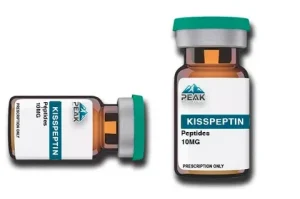 Summary Table
| Feature | Details |
|---|---|
| Origin | Derived from KISS1 gene; 10-amino acid bio active fragment |
| Receptor | Binds GPR54/KISS1R, triggering GnRH → LH/FSH release |
| Physiological Roles | Puberty initiation, fertility regulation, tumor suppression, vasoconstriction |
| Cardiac Impact | Promotes collagen deposition via FAK, affecting heart structure |
| Metabolic Influence | Involved in glucose metabolism, appetite, and cardiovascular health |
| MG | 5mg*10vials, 10mg*10vials |
|---|---|
| Cat. No | KS5, KS10 |
Be the first to review “KissPeptin-10Kisspetin”
Related products
peptides
peptides
peptides
peptides
peptides
peptides
peptides
peptides
Reviews
There are no reviews yet.