
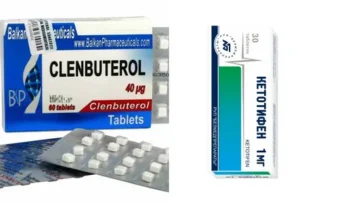
Buy CLENBUTEROL Online

$25.00
Uses of Clenbuterol
Historically, clenbuterol has been used as a bronchodilator for certain respiratory disorders, particularly in veterinary medicine and, in some countries, specific respiratory conditions.
On the other hand, it is also used outside approved medical settings for fat-loss and bodybuilding purposes.
These applications are not considered established medical treatments and may expose users to significant health risks.
Clenbuterol Uses Mechanism and Safety Information
Clenbuterol is a β2-adrenergic agonist and bronchodilator that was originally developed to help manage respiratory conditions by relaxing the muscles surrounding the airways.
As a result, breathing can be made easier in certain medical applications.
However, clenbuterol is not approved for human use in the United States, and its regulatory status varies between countries.
Because of its stimulant-like properties, it has also gained attention in bodybuilding and weight-loss communities.
How Does Clenbuterol Work?
Clenbuterol works primarily by stimulating β2-adrenergic receptors.
Consequently, the airways can become more relaxed and expanded, which produces a bronchodilating effect.
In addition, stimulation of these receptors can increase metabolic activity and body temperature.
Because of these effects, clenbuterol has been associated with increased calorie expenditure and fat metabolism.
It is also sometimes discussed in bodybuilding circles because lean muscle may be preserved during periods of calorie restriction.
Nevertheless, these non-medical uses are considered off-label or unauthorized, depending on the country, and should not be confused with approved medical treatment.
Uses of Clenbuterol
Historically, clenbuterol has been used as a bronchodilator for certain respiratory disorders, particularly in veterinary medicine and, in some countries, specific respiratory conditions.
On the other hand, it is also used outside approved medical settings for fat-loss and bodybuilding purposes.
These applications are not considered established medical treatments and may expose users to significant health risks.
Dosage and Administration
Clenbuterol may be available in different formulations, including tablets and liquid preparations.
However, dosage recommendations vary considerably by formulation, jurisdiction, and intended use.
Therefore, specific bodybuilding dosing schedules should not be treated as medical guidance.
Importantly, attempts to increase or cycle clenbuterol doses can increase exposure to its stimulant effects.
Even relatively low amounts may produce noticeable adverse reactions, particularly in individuals who are sensitive to stimulants.
Potential Side Effects
Data from clinical studies indicate clenbuterol use leads to several side effects.
Cardiovascular effects may include rapid heartbeat, palpitations, elevated blood pressure, and abnormal heart rhythms.
Furthermore, nervous-system effects such as anxiety, tremors, headaches, and insomnia may occur.
Other reported effects include excessive sweating, muscle cramps, and electrolyte disturbances.
With prolonged or excessive exposure, more serious cardiovascular complications may develop.
When clenbuterol exposure is suspected, clinicians should supervise medical care.
Legal and Regulatory Status
The legal status of clenbuterol differs internationally. In the United States, the FDA does not approve clenbuterol for human use, and veterinarians mainly use it for veterinary applications.
Governing anti-doping rules prohibit clenbuterol in competitive sports.
Summary
Overall, clenbuterol is a potent β2-adrenergic stimulant with bronchodilating properties.
Although it has become popular in some fat-loss and bodybuilding communities, its non-medical use can carry substantial risks.
Therefore, individuals should approach clenbuterol with caution and verify its legal status and medical suitability with an appropriate healthcare professional.
| Quantity | 100 tablets/bottle |
|---|---|
| Cat. No | CB40 |
Be the first to review “Buy CLENBUTEROL Online”
Related products
Steroid and Sarms tablets

Steroid and Sarms tablets

Steroid and Sarms tablets

Steroid and Sarms tablets
Steroid and Sarms tablets
Steroid and Sarms tablets
Steroid and Sarms tablets
Steroid and Sarms tablets
Reviews
There are no reviews yet.