
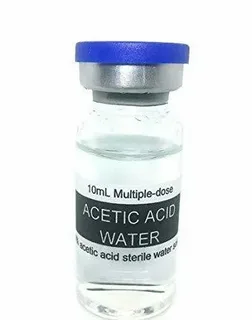
Acetic acid water
Price range: $40.00 through $50.00
Acetic Acid Water – Properties Uses & Research Applications
For example, acetic acid (CH₃COOH) is a weak organic acid and the main vinegar component.
When dissolved in water, it produces a slightly acidic solution with a distinctive sour taste and pungent smell.
Formula: CH₃COOH
Acetic Acid Water – Properties Uses & Research Applications
For example, acetic acid (CH₃COOH) is a weak organic acid and the main vinegar component.
When dissolved in water, it produces a slightly acidic solution with a distinctive sour taste and pungent smell.
Formula: CH₃COOH
Acidity: Weak acid (does not fully dissociate in water).
Dissociation reaction:
Moreover, CH₃COOH ⇌ CH₃COO⁻ + H⁺.
pH range: Typically, 2.4–3.4 for concentrated solutions; diluted vinegar is closer to pH 4–5.
Solubility: Fully miscible with water in all proportions.
Common Concentrations
-
Vinegar grade – 4–8% acetic acid in water (safe for food use).
-
Laboratory grade – 10–99% (glacial acetic acid is ~99%, highly corrosive).
-
Industrial cleaning or processing – Usually 10–20%.
Uses of Acetic Acid in Water
Culinary: Vinegar for flavoring, pickling, and food preservation.
Cleaning: Natural disinfectant and limescale remover.
Laboratory: Solvent, pH adjuster, and buffer preparation.
Industrial: Textile dyeing, photographic development, and polymer production.
Safety Considerations
Dilute solutions (like table vinegar) are generally safe for consumption.
Concentrated solutions can cause skin burns, eye damage, and respiratory irritation—should be handled with protective gear.
Always dilute by adding acid to water, not the other way around, to prevent splashing hazards.
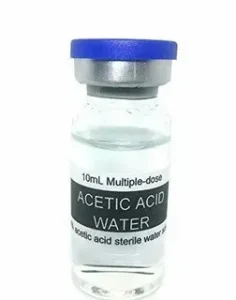
| ML | 3ml/10vials, 10ml/10vials |
|---|---|
| Cat. No | BA3, BA10 |
Be the first to review “Acetic acid water”
Related products
peptides
peptides
peptides
peptides
peptides
peptides
peptides
peptides
Reviews
There are no reviews yet.